Creating the first Green Shipping Corridor in the United States – Taking New York City’s C40 Status [1] for a River Voyage
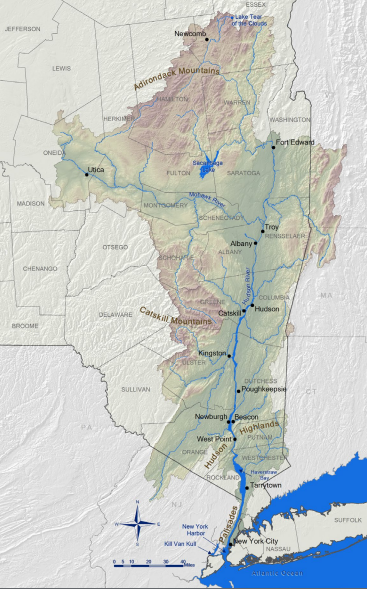
The Hudson River, NYS Canal System, NY/NJ Harbor , and coastal New York
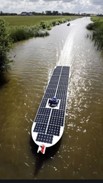
Electric Hudson Aims to Decarbonize New York’s Maritime Transport Through Electrification and Innovative Energy Solutions.
Project Overview
- Electric Hudson seeks to transition the Hudson River’s economy towards decarbonization by utilizing electric vessels.
- The project aims to create the first Green Shipping Corridor in the U.S. to support clean maritime operations.
- It addresses the need for coordinated energy network research and development to manage rising energy demands and reduce costs.
Implementation Strategy
- Develop charging infrastructure for electric vessels, including Ship-to-Grid (S2G) and Grid-to-Ship (G2S) services.
- Engage with vessel operators to understand operational cycles and reduce energy storage needs.
- Identify strategic charging locations in collaboration with key stakeholders like NYSERDA and NJEDA.
Innovation and Benefits
- The project introduces a clean maritime planning framework that integrates energy network requirements with marine user needs.
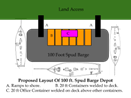
- It explores the use of floating battery barges and grid-scale battery solutions for flexible charging.
- The approach aims to lower infrastructure costs and enhance energy resilience across the Hudson River corridor.
Learning Objectives
- Investigate support for S2G services among marine users to offset infrastructure costs.
- Identify barriers to coordinated electrification efforts across the Hudson/Harbor/canals.
- Assess challenges in developing infrastructure around small ports, especially in protected areas.
- Analyze operational patterns to design scalable electrification solutions for various vessel types.
Today, most vessels, docks, and ports on the Hudson, along the canals, and in the NY/NJ Harbor still rely on fossil fuels—but perhaps this plan can move the Hudson River and New York’s economy toward decarbonization. Historically, marine and energy network planning have progressed separately, creating a risk that rising energy demand could drive up decarbonization costs.
Electric Hudson explores how electric vessels can support the grid by supplying power during peak demand — reducing strain, cutting CO₂ emissions, and unlocking new revenue opportunities for users through flexibility services. It’s a smarter, cleaner way to balance the network while accelerating the shift away from fossil fuels.
To enable the shift to electrification, we need to develop the right charging infrastructure, grid to ship (G2S)—not only to support electric vessels, but also to unlock the potential of Ship-to-Grid (S2G) and Ship-to-Charger (S2C) services.
When moored, electric vessel operators could feed surplus power back into the grid, supporting the network during periods of peak demand and participating in flexibility markets. Another application of G2S/S2G is the use of floating battery barges—charged from their own solar, wind, and tidal current sources or overnight when electricity prices are low, then switching over in high-demand areas to, charge vessels, charge cars, trucks, and bikes in waterfront/railroad parking area, and reinforce the grid and reduce the need for costly infrastructure upgrades.
How will it be done?
This project will develop an innovative, integrated energy system and a robust business case that fully accounts for the impacts of decarbonizing vessels, docks, large and small ports, and electric vehicles along the Hudson and in the Harbor. To achieve this, we will:
- Design technical solutions for vessel charging, shore power supply, and flexibility services such as Ship -to-Grid (S2G), Grid- to – Ship (G2S), and Ship-to-charger (S2C).
- Engage with vessel operators to understand operational duty cycles and explore opportunities to reduce power demand and energy storage requirements
- Identify strategic charging locations that support clean maritime operations — validated in collaboration with the States of New York (NYSERDA and NYPA) and New Jersey, (NJEDA) The Hudson River Metropolitan Planning Organizations (MPO),[3] New York New Jersey Port Authority (NYNJPA), and New York City’s EDC Blue Highways Program to align with their decarbonization strategies
- Develop investment-ready business models that reflect user needs, shaped through input from project partners and key stakeholders
- Conduct a Cost-Benefit Analysis based on the preferred business models, including detailed financial analysis to support a demonstration project.
- Hold in-depth consultations with key users to ensure strong engagement in the trial phase. The business case and Green Shipping Corridor concept will be refined through stakeholder feedback and validation
- Create a roadmap for the wider adoption of clean maritime solutions, extending benefits to other users and regions.
What makes it innovative
Our approach is truly innovative, as it represents the first clean maritime planning framework to consider energy network requirements alongside the needs of marine users, and other key stakeholders.
In contrast, traditional decarbonization efforts for waterways often involve extensive, piecemeal energy infrastructure upgrades at multiple connection points. Planning in isolation —between maritime operators, State, County, and local authorities, and electrical distribution network operators— can lead to inefficiencies and delays. Without coordinated efforts, marine users are less likely to invest in clean technologies, putting the decarbonization target for the Hudson at risk.
This integrated approach delivers ambitious innovation by:
- Identifying the most effective pathways to decarbonize the Hudson/Harbor/Canal-based traffic and operations through electrification and the potential use of near-zero-emission fuels.
- Investigating the role of ‘floating batteries’, which can charge and discharge at different times and locations to help manage local network constraints.
- Exploring grid-scale battery solutions to enable flexible, high-speed charging for vessels, ensuring reliable and resilient maritime operations.
- Conducting detailed engineering design for vessel electrification—covering both onboard energy requirements and the charging infrastructure needed for bi-directional power flows.
This coordinated, system-wide approach aims to accelerate clean maritime adoption while reducing infrastructure costs and improving long-term energy resilience across the Hudson River corridor and New York’s Marine Highways.
What we hope to learn
During the discovery phase, working closely with vessel operators, small port operators, the Port Authority of NY and NJ, NYSERDA, NYPA and the to understand their needs and shape our approach accordingly. Through this engagement, we will investigate several key elements:
- Is there strong support among marine users, especially for Ship -to-Grid (S2G) services, which could help offset the costs of the new infrastructure?
- Is a major barrier the lack of a coordinated approach to electrification across the Hudson/Harbor/canals?
- Do infrastructure development around small ports present unique challenges, particularly where sites are in environmentally, culturally or historically protected areas?
- Are there enough shipyard resources, and solar/battery/electric maritime equipment providers in the study area?
In the first phase we will identify additional technical and operational hurdles. For example, determining whether retrofitting existing vessels with batteries or hydrogen fuel cells is practical or feasible. Additionally, there’s the challenge of deploying sufficient charging infrastructure to meet demand, especially for operators whose vessels are in near-constant use. For these users, ensuring vessels are equipped with batteries large enough to last a full operating cycle is critical.
By continuing to engage with operators and analyzing vessel traffic data, we intend to build a deeper understanding of operational patterns across different vessel types—insights that are vital to designing practical, scalable electrification solutions.
[1] Mayors of C40 cities are committed to using an inclusive, science-based and collaborative approach to cut their fair share of emissions in half by 2030, help the world limit global heating to 1.5°C, and build healthy, equitable and resilient communities.
[2] Green shipping corridors are a decarbonization and environmental protection strategy that is gaining popularity internationally. However, there are a variety of definitions of what constitutes a green shipping corridor despite nations making bold commitments to pursuing their development.
[3] New York Metropolitan Transportation Council, Mid-Hudson Transportation Management Area, Capital District Transportation Committee