A new collaboration aims to simplify launching low-carbon coastal shipping
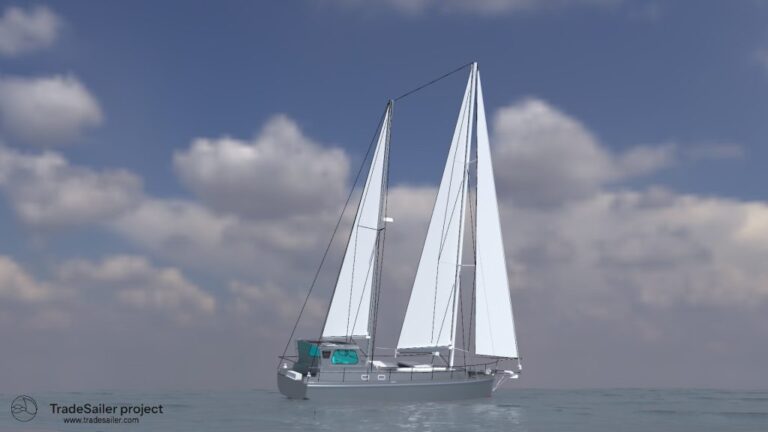
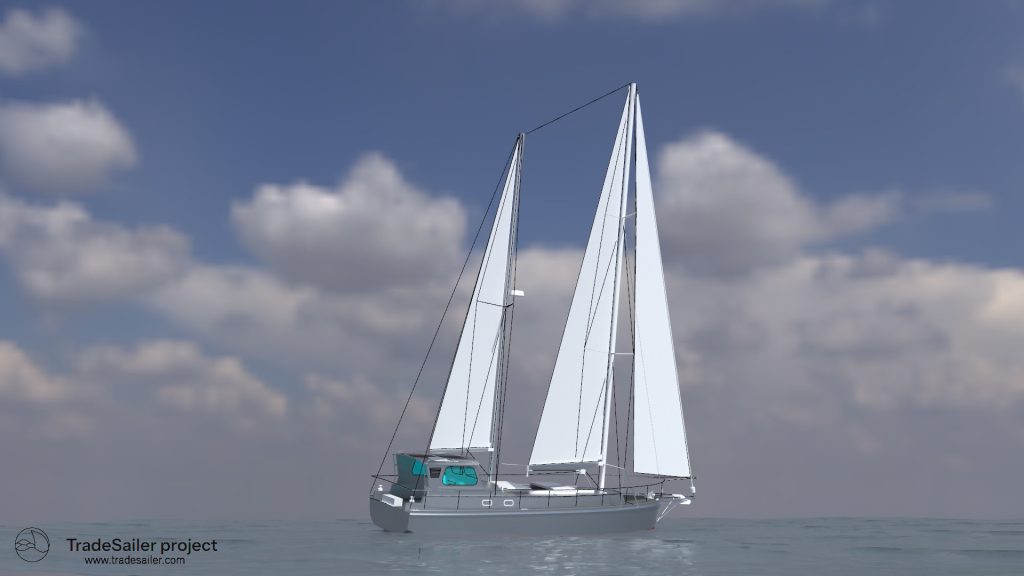
The future of coastal sail freight may arrive sooner than predicted. The Center for Post Carbon Logistics (CPCL), Catran Naval Architect’s TradeSailer Project, and Bay State Sail Freight are collaborating to complete the design of the TradeSailer 120, a 39-foot, ketch-rigged cargo vessel intended to make low-carbon short sea shipping more practical for coastal communities and small freight operators.
A right-sized vessel for proving new markets
The TradeSailer 120 is designed as a practical entry point for low-carbon coastal freight service. Operated by two crew members, it can carry up to 9 pallets, 635 cubic feet, or 7.75 short tons of cargo. That capacity is large enough to support real commercial service but compact enough to keep capital requirements modest—an important combination for entrepreneurs testing new routes, customers, and cargo flows.
Designed to fit the existing logistics chain
One of the vessel’s most useful features is its ability to lift pallets of up to 550 lbs. (250 kg) using a crane built into the main boom. That means most pallets do not have to be stripped down and re-stacked before loading or after arrival. For shippers, it saves time, reduces handling, and makes the vessel compatible with the logistics systems already operating on shore.
Because the TradeSailer 120 does not require special shoreside infrastructure, it can both compete and cooperate with conventional freight systems on cost and convenience. It is also equipped with an auxiliary engine for maneuvering, docking, and emergencies.
Lowering the barriers to entry
In the United States, the TradeSailer 120 is designed as an Uninspected Cargo Vessel, a category for cargo vessels under 40 feet in length (on deck) that do not carry hazardous cargo or more than 15 tons of cargo. By balancing economic viability, technical integration, and modest initial investment, the vessel offers a clear pilot platform for the emerging U.S. coastal sail freight sector.
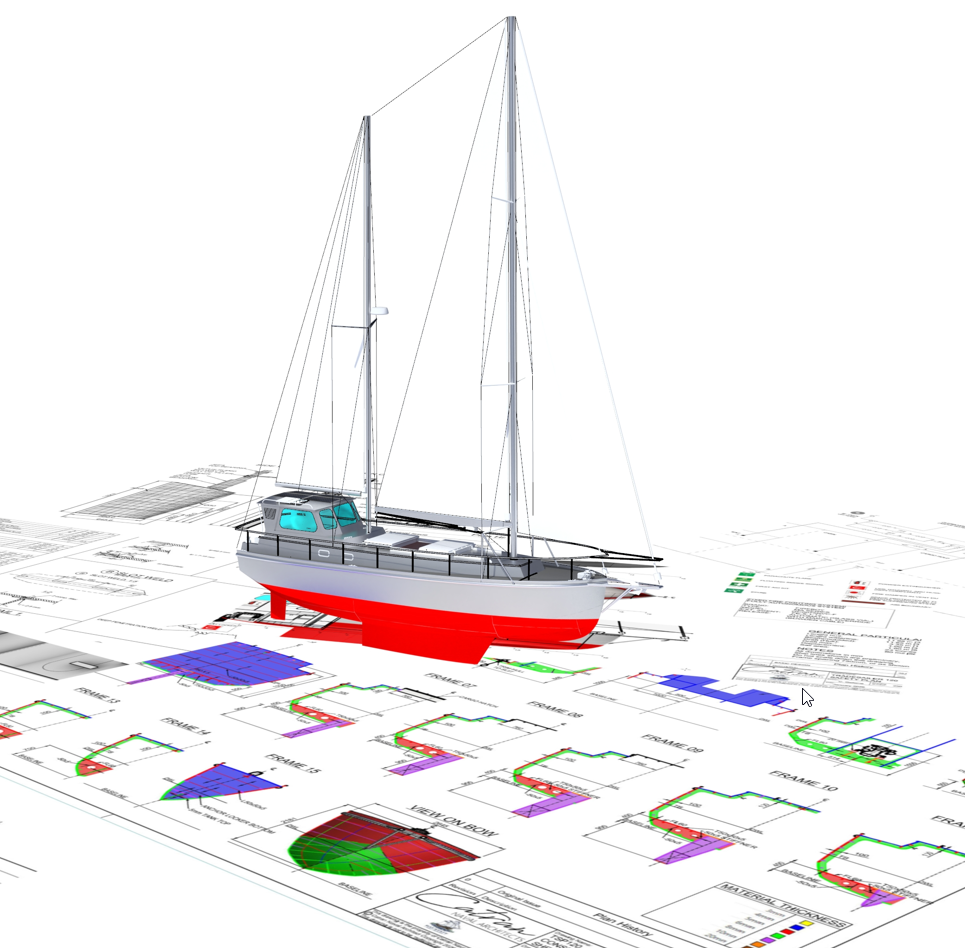
The initial investment from Bay State Sail Freight and CPCL means plans for the TradeSailer 120 can be purchased off-the-shelf. That gives prospective operators a faster path to construction estimates and local shipyard builds, reducing the time between a project announcement and operational service by an estimated 12 to 18 months. It also helps short sea shipping entrepreneurs avoid an estimated $40,000 in engineering costs, giving start-ups greater confidence when preparing financial projections and pitching to investors and customers.
“Most sail freight start-ups suffer from two major barriers to entry,” explained Steven Woods, CPCL Director of Research and Development. “First, start-ups face considerable engineering and capital expenses that can be difficult to predict or estimate. Second, it can be hard to maintain enthusiasm for months after announcing a sail freight service and before there are construction photos to share. Our collaboration with the TradeSailer Project and Bay State Sail Freight drastically reduces both of those barriers.”
An open-source path for sustainable shipping
After 10 licenses to build are purchased, the design will be released into the public domain. The goal is to entirely remove another barrier for small sail freight projects and make it easier for new operators to act quickly, plan confidently, and get vessels into service.
Andrew Willner, Executive Director of the Center for Post Carbon Logistics, said: “Open-source hardware is a critical means of ensuring that new projects can act quickly, confidently plan their services, and get a working vessel in the water. This joins a portfolio of other CPCL projects oriented toward developing next-generation standards for sustainable short sea shipping.”
A collaboration built around shared goals
Catran Galema, founder of Catran Naval Architects and the TradeSailer Project, said, “I am happy to be working with the Center for Post Carbon Logistics on addressing a fundamental need for the sail cargo industry: creating a set of off-the-shelf vessel designs that can be quickly and effectively deployed worldwide. The ambition of the TradeSailer Project is to deliver holistic solutions for maritime decarbonization on both ocean and coastal routes, and the TradeSailer 120 is a critical component of these solutions.”
The three organizations bring complementary strengths to the effort. The Center for Post Carbon Logistics educates, advocates, and engineers for sustainable short sea shipping in the United States. The TradeSailer Project, initiated by Catran Naval Architects in 2023, provides standardized designs for sail freight in the Pacific Small Island Developing States and beyond. Bay State Sail Freight, founded in 2025, seeks to decongest and decarbonize transportation in coastal New England. Together, they are helping turn sail freight from a compelling idea into a practical option for coastal logistics.
All illustrations provided by the TradeSailer Project.